Lion’s mane has one of the cleaner safety records among supplements sold for cognition — it has been eaten as food in East Asia for centuries, and the human trials reported adverse events no different from placebo. That is genuinely reassuring. It is also not the same as a large safety database, and there are a few situations that deserve a conversation with a doctor before you start.
What actually gets reported
Digestive upset
This is the common one: mild stomach discomfort, loose stools, occasionally nausea. It shows up most at higher doses and often settles if you drop back to a standard serving or take it with food rather than on an empty stomach.
If you are taking several grams of raw powder a day, this is the likeliest thing you will notice — and it is a dose problem, not a reason to abandon the mushroom.
Allergic reactions
These happen and deserve to be taken seriously. There are published case reports of skin reactions after contact or ingestion, and at least one report of a serious respiratory reaction requiring hospital treatment.
The rule is simple: if you have a mushroom allergy, this is a mushroom. It is not a plant extract, not a synthetic nootropic, and being sold as a brain supplement does not change what it is biologically.
Skin reactions without a known allergy
Occasional reports describe itching or rash in people with no prior mushroom allergy. Rare, but if a rash appears after you start, stop and see whether it clears.
Who should check with a doctor first
- Anyone on anticoagulants or with a bleeding disorder. There is limited data suggesting effects on platelet aggregation. The evidence is thin, which is exactly why this is a conversation rather than a self-assessment.
- Anyone taking medication for blood glucose. Animal studies show effects on blood sugar. If you are managing glucose with medication, the concern is not the mushroom alone but the combination.
- Anyone with a scheduled surgery. Given the platelet question, stopping a couple of weeks beforehand is the conservative call. Tell your surgeon what you take.
- Pregnancy and breastfeeding. There is no adequate human data. That means unknown, not safe — and unknown is not a risk worth taking here.
- Anyone with an autoimmune condition. Beta-glucans are studied for immune signalling. Nobody has tested what that means in autoimmune disease, so ask the specialist who manages it.
What about drug interactions?
There is no established interaction list for lion’s mane, because the studies needed to build one have not been done. The two theoretical concerns above — anticoagulants and glucose-lowering medication — come from mechanism and animal data, not from documented human interactions.
Absence of a documented interaction is not evidence of safety in combination. If you take prescription medication daily, mention any supplement to your prescriber. That is ordinary practice, not caution specific to this mushroom.
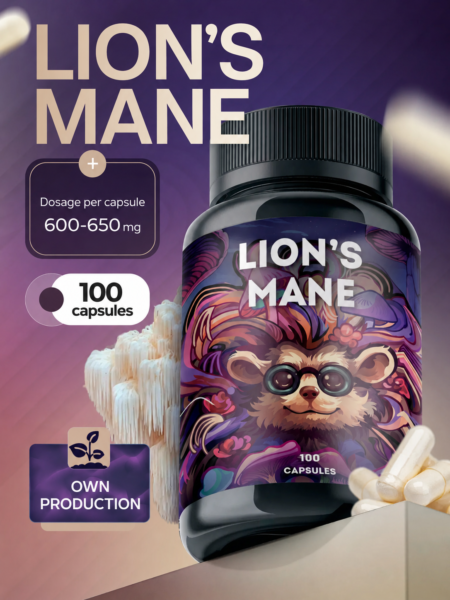
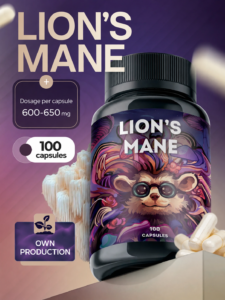
Cápsulas de juba de leão 100 un., 600–650 mg | Hericium erinaceus
A juba de leão (Hericium erinaceus) contém dois compostos únicos — erinacinas e hericenonas — que estimulam a síntese do fator de crescimento nervoso (NGF). Apoia a saúde cerebral, a memória, o foco e a função cognitiva. As nossas cápsulas contêm 600–650 mg de juba de leão pura. 100 cápsulas por frasco.
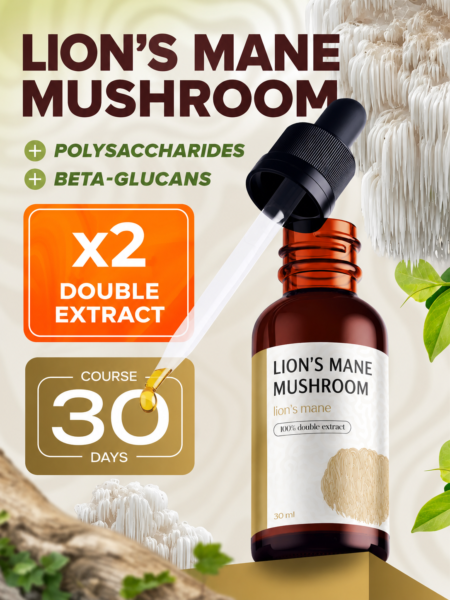
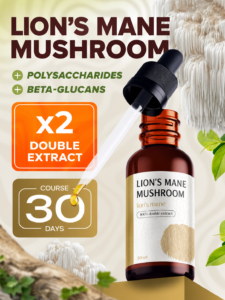
Duplo extrato de juba de leão 30 ml | Apoio ao cérebro e à memória | Tintura de Hericium erinaceus
Potente tintura de juba de leão de dupla extração, que combina extração em água e em álcool para a máxima biodisponibilidade de hericenonas e beta-glucanos. Apoia a função cognitiva, a regeneração nervosa e a clareza mental. ! Sem álcool
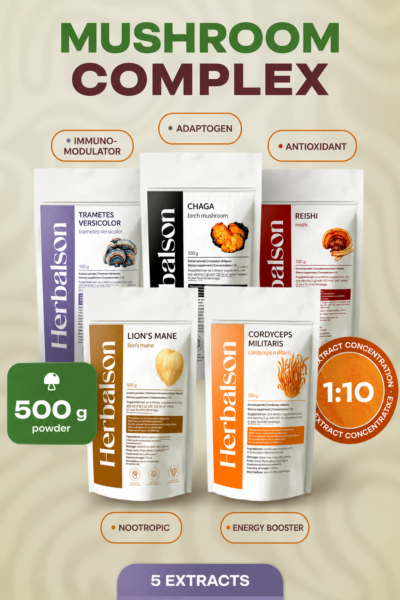
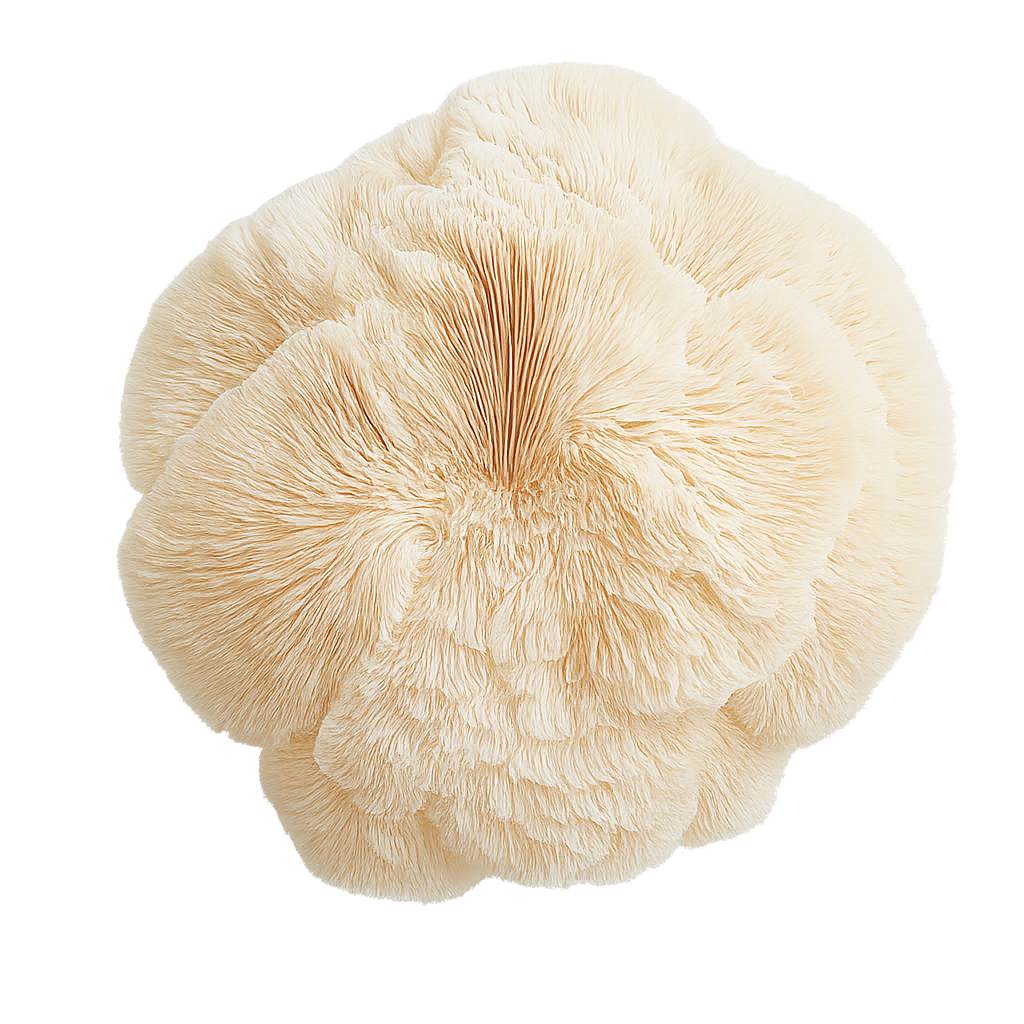
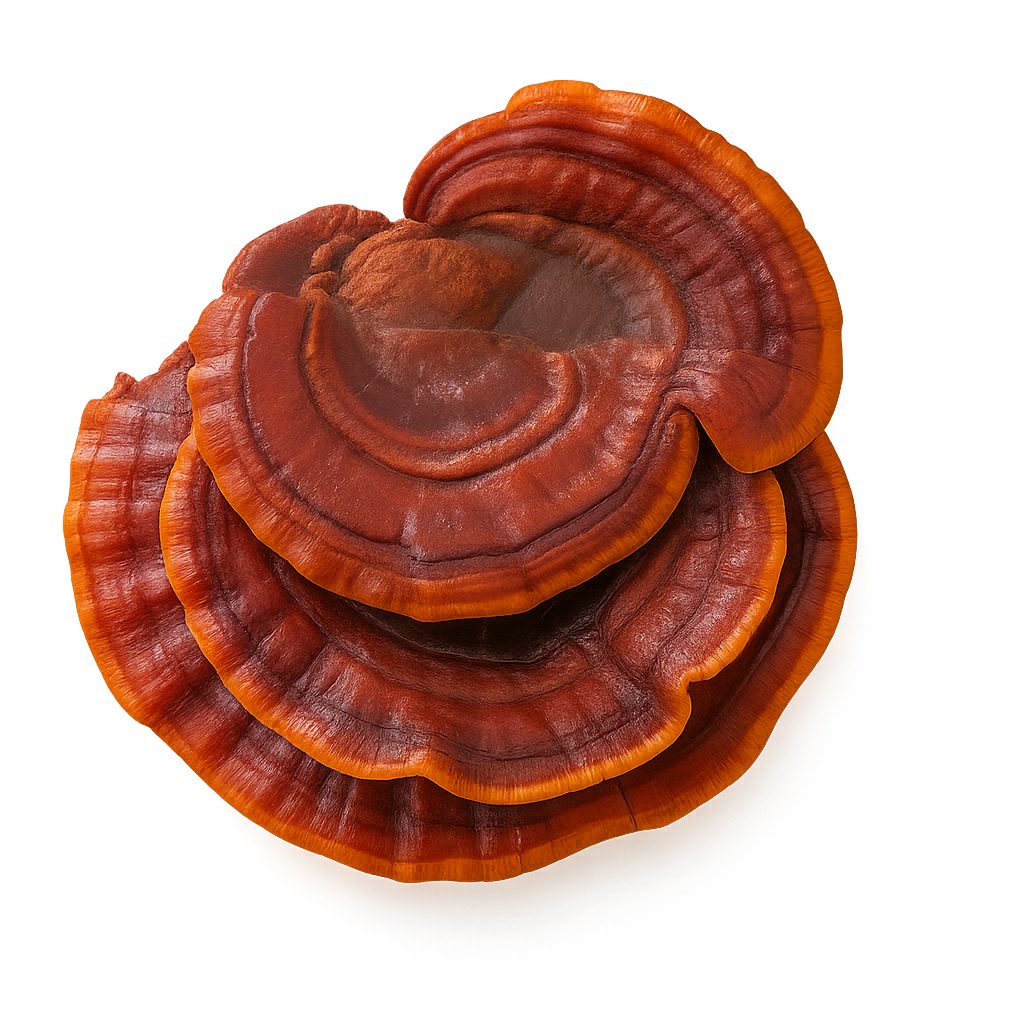
Conjunto de pós de cogumelos: juba de leão, cordyceps, reishi, cauda de peru e chaga | 5×100 g
Um conjunto completo de 5 pós de cogumelos funcionais: juba de leão, cordyceps, reishi, cauda de peru e chaga (100 g cada). Perfeitos para batidos, chá ou cozinha. Cada pó é feito a partir de corpos frutíferos inteiros, secos e finamente moídos para preservar os compostos bioativos.
Things it does not do
Worth stating plainly, because the search results around this topic are noisy:
- It is not psychoactive. Lion’s mane is not a psychedelic and contains nothing hallucinogenic. It is regularly confused online with unrelated mushrooms; it is not one of them.
- It is not a sedative or a stimulant. It does not reliably make people sleepy or wired. Reports in both directions exist and neither is supported by trial data.
- It is not addictive and there is no described withdrawal. The one thing that happens when people stop, in the trial that measured it, is that the measured improvement faded.
The risk nobody talks about: what is actually in the jar
For most buyers the realistic safety question is not the mushroom — it is the product.
Mushrooms are efficient accumulators of heavy metals from whatever they grow on. A supplement made from material of unknown origin, with no third-party testing, is a genuine unknown in a way that the species itself is not. This is the argument for buying from someone who can tell you where the mushroom was grown and show a certificate of analysis covering heavy metals and microbial load.
It is also the argument for knowing whether you are buying fruiting body or grain-grown mycelium — not a safety issue as such, but it determines whether you are getting the mushroom at all.
How to start sensibly
- Start at the standard serving rather than a loading dose. There is no evidence a larger starting amount helps, and it is the reliable way to get stomach upset.
- Take it with food for the first week if your stomach is sensitive.
- Give it a month at a steady dose before changing anything.
- Stop if you get a rash, swelling or any breathing symptom, and seek medical advice.
Our duplo extrato de juba de leão is a 1 ml daily serving from fruiting bodies grown on our own farm; the cápsulas are the same material in a fixed dose.
Perguntas frequentes
Can lion’s mane cause anxiety?
The trial evidence points the other way — the mood studies reported lower anxiety scores. Individual reports of feeling anxious exist, as they do for almost any supplement, but there is no trial signal for it.
Does it affect sleep?
No consistent effect has been shown. Taking it in the morning or early afternoon avoids the question entirely, and that is when you want it anyway.
Can I take it every day indefinitely?
The longest trial ran 49 weeks without a safety signal. Beyond that, nobody has studied it — which is worth knowing rather than worrying about.
Is it safe for children?
It has not been studied in children. That is a decision for a paediatrician, not a supplement label.
For the full evidence picture, see our guia completo da juba de leão.