These two get compared constantly, usually as if you have to pick one. You do not — they are aimed at different things, and the most common way people actually use them is together. But if you are buying one bottle, here is how to choose.
The one-line version
Criniera di leone is taken for cognition — focus, memory, mental clarity. cordyceps is taken for physical output — endurance, capacity under load, oxygen use.
Neither is a stimulant. Neither does anything you will feel in twenty minutes. Both were studied over weeks.
Side by side
| Criniera di leone | Cordyceps militaris | |
| Species | Hericium erinaceus | Cordyceps militaris |
| Bought for | Focus, memory, mental clarity | Endurance, exercise capacity |
| Key compounds | Hericenones (fruiting body), erinacines (mycelium) | Cordycepin, adenosine, beta-glucans |
| Human evidence | Small cognitive and mood trials, 4–16 weeks | Small exercise-capacity trials, weeks of intake |
| Onset | Weeks | Weeks |
| Best time | Morning or early afternoon | Morning or before training |
| Preferred format | Dual extract | Hot water or dual extract |
What each one has behind it
Criniera di leone
The cognitive trials are small — around 30 people each — but they point the same way. Adults with mild cognitive impairment improved over 16 weeks at 3 g a day compared with placebo, and the difference grew over time before fading once they stopped. A 12-week trial in healthy adults reported improvement on cognitive testing. A four-week trial reported lower depression and anxiety scores.
The mechanism people cite — stimulation of nerve growth factor synthesis — comes from cell cultures and animals, not humans. It is a plausible story, not a demonstrated pathway in a person.
cordyceps
A randomised trial of the CS-4 strain in healthy older adults reported improvements in exercise capacity measures, including ventilatory threshold. A trial of a Cordyceps militaris-containing blend found better tolerance of high-intensity exercise after chronic supplementation — and notably less effect after a single dose.
That last detail is the practical one: cordyceps is not a pre-workout. Taking it half an hour before the gym is not how it was studied.
Choosing one
Take lion’s mane if your bottleneck is mental: long tasks where attention drifts, work that needs sustained concentration, or you are cutting back on stimulants and want something without the rebound.
Take cordyceps if your bottleneck is physical: endurance training, altitude, sessions where you run out of capacity before you run out of motivation.
Take neither if you are expecting something you feel acutely. Both disappoint that expectation, and the disappointment usually gets blamed on the product rather than the framing.
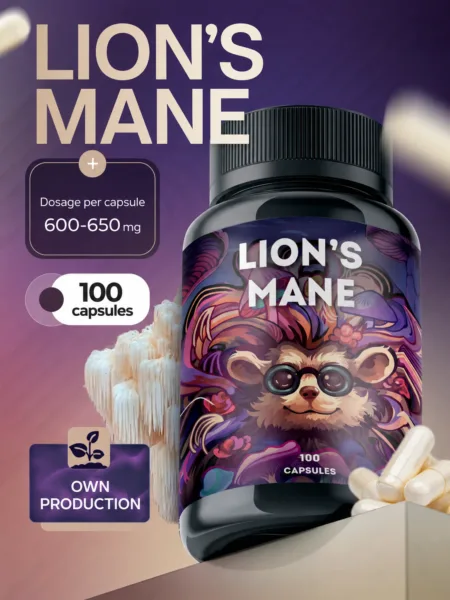
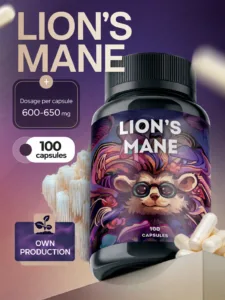
Capsule di criniera di leone 100 pz, 600–650 mg | Hericium erinaceus
Estratto di corpo fruttifero di criniera di leone (Hericium erinaceus), 600 mg per capsula. 100 capsule, due al giorno — scorta per 50 giorni.
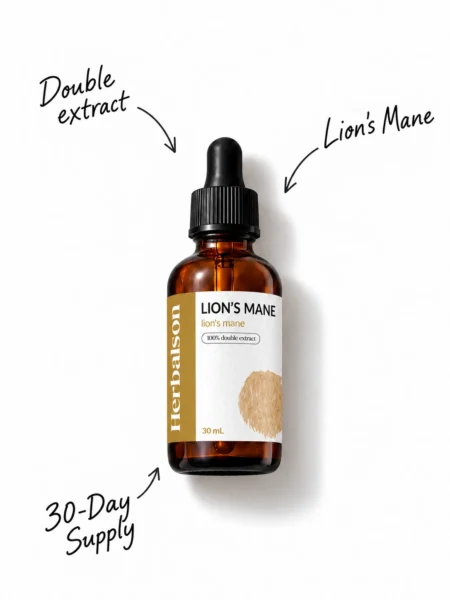
Doppio estratto di criniera di leone 30 ml | Supporto per cervello e memoria | Tintura di Hericium erinaceus
Doppio estratto liquido di corpi fruttiferi di Hericium erinaceus, ottenuto con acqua calda ed etanolo. 30 ml, 1 ml al giorno, scorta per un mese.
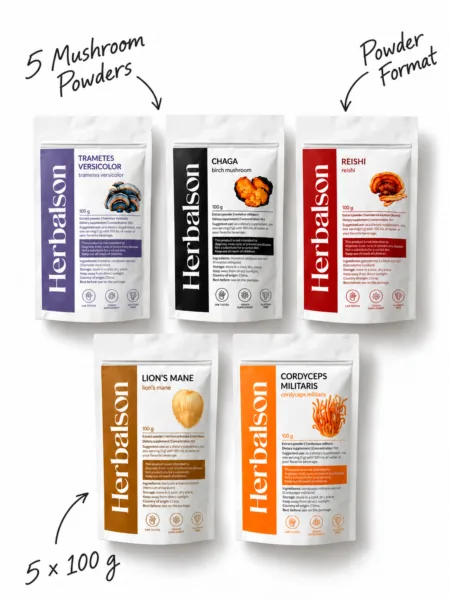
Set di polveri di funghi: criniera di leone, cordyceps, reishi, coriolo e chaga | 5×100 g
Cinque polveri di corpo fruttifero da 100 g ciascuna: criniera di leone, cordyceps, reishi, coriolo e chaga. Una porzione da 3 g per tazza, circa un mese di tutti e cinque.
Taking them together
This is the common pattern and there is no evidence of interference. Both in the morning: lion’s mane for the mental side, cordyceps for the physical. Reishi, if you add a third, goes at night.
What stacking does not do is speed anything up. Two mushrooms on a four-week timeline are still on a four-week timeline.
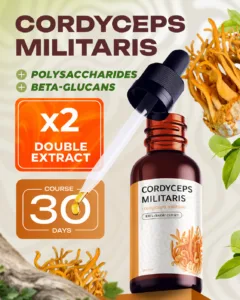
If you want to run both, the set di quattro tinture covers the rotation; individually there is the lion’s mane extract and the cordyceps extract.
The thing that matters more than the choice
Whichever you pick, the source material decides whether you get anything at all.
Cordyceps is the worst-affected species on the market: most products are mycelium grown on rice, sold with the grain still in it, because real Cordyceps militaris fruiting bodies are difficult to cultivate. Lion’s mane has the same problem, slightly less severely.
Check for the named part, a beta-glucan figure rather than “polysaccharides”, and for cordyceps a cordycepin number. Our guide to fruiting body vs mycelium covers how to read this, and cordyceps militaris vs sinensis covers the species confusion specific to cordyceps.
Domande frequenti
Which is better for energy?
Neither produces energy the way caffeine does. Cordyceps is the one studied in relation to physical capacity, so if “energy” means getting through a hard session, that is the one. If it means feeling awake at 3pm, neither is the answer.
Can I take both in the same drink?
Yes. Both extracts mix into coffee or water without issue.
Which for studying or work?
Lion’s mane, and start a month before you need it rather than the week of.
Do they interact with each other?
No interaction has been described. They are foods with a long history of being eaten together in the same cuisines.
Which is better value?
Per gram, lion’s mane is cheaper to grow, so it is usually the cheaper product. Value depends entirely on whether you are buying fruiting bodies or rice.
cordyceps · Criniera di leone · Kit