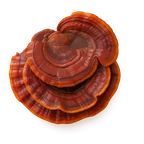
Turkey tail has the most substantial clinical literature of any functional mushroom — and also the widest gap between what that literature is about and what a supplement can claim. Getting that distinction right is the whole point of this article. What turkey tail is Trametes versicolor, formerly Coriolus versicolor, is one of the most […]
Reishi is the mushroom people reach for at night, and it is worth being clear about what that does and does not mean. It is not a sedative. It will not knock you out. What the evidence supports is narrower and slower than most of the marketing suggests — which is exactly why it is […]
These two get compared constantly, usually as if you have to pick one. You do not — they are aimed at different things, and the most common way people actually use them is together. But if you are buying one bottle, here is how to choose. The one-line version Lion’s mane is taken for cognition […]
Two different fungi share the name cordyceps, and they are not interchangeable. One grows on caterpillars at high altitude and is among the most expensive biological materials on earth. The other is bright orange, can be cultivated properly, and is what almost every honest supplement on the shelf is made from. The two species Ophiocordyceps […]
Powder is the cheapest, capsules are the easiest, extracts are the most concentrated. That summary is true and almost useless on its own, because the differences that matter are about what your body can actually get out of each one. The problem all three formats are solving Mushroom cell walls are made of chitin — […]
If you learn one thing before buying a mushroom supplement, make it this one. The difference between a fruiting-body product and grain-grown mycelium decides more about what is in the jar than the brand, the price or anything printed on the front of the label. Two different things, both legally called mushroom A fungus has […]
Lion’s mane has one of the cleaner safety records among supplements sold for cognition — it has been eaten as food in East Asia for centuries, and the human trials reported adverse events no different from placebo. That is genuinely reassuring. It is also not the same as a large safety database, and there are […]
Nobody takes lion’s mane for a week. The research that reported anything useful ran for a month or more — and the one trial that tested a single dose measured something quite narrow. Here is what the timelines in the studies actually look like. The short answer Within an hour: one small trial measured faster […]
The honest answer to „how much lion’s mane should I take” is that it depends on what is in the jar — and most labels do not tell you. Here are the doses used in the human trials, how to convert them to an extract, and a starting point for each format. What the human […]
Lion’s mane is the mushroom people reach for when they want to think more clearly. It is sold as a nootropic, a memory aid, a „brain food” — and most of those pages cite the same handful of studies without telling you how small they were or what was actually in the capsules. This guide […]