Lion’s mane is the mushroom people reach for when they want to think more clearly. It is sold as a nootropic, a memory aid, a “brain food” — and most of those pages cite the same handful of studies without telling you how small they were or what was actually in the capsules.
This guide does the opposite. Here is what Hericium erinaceus is, which compounds matter and where they live in the mushroom, what human trials have and have not shown, the doses those trials actually used, and how to read a label so you can tell a real extract from starch.
What lion’s mane actually is
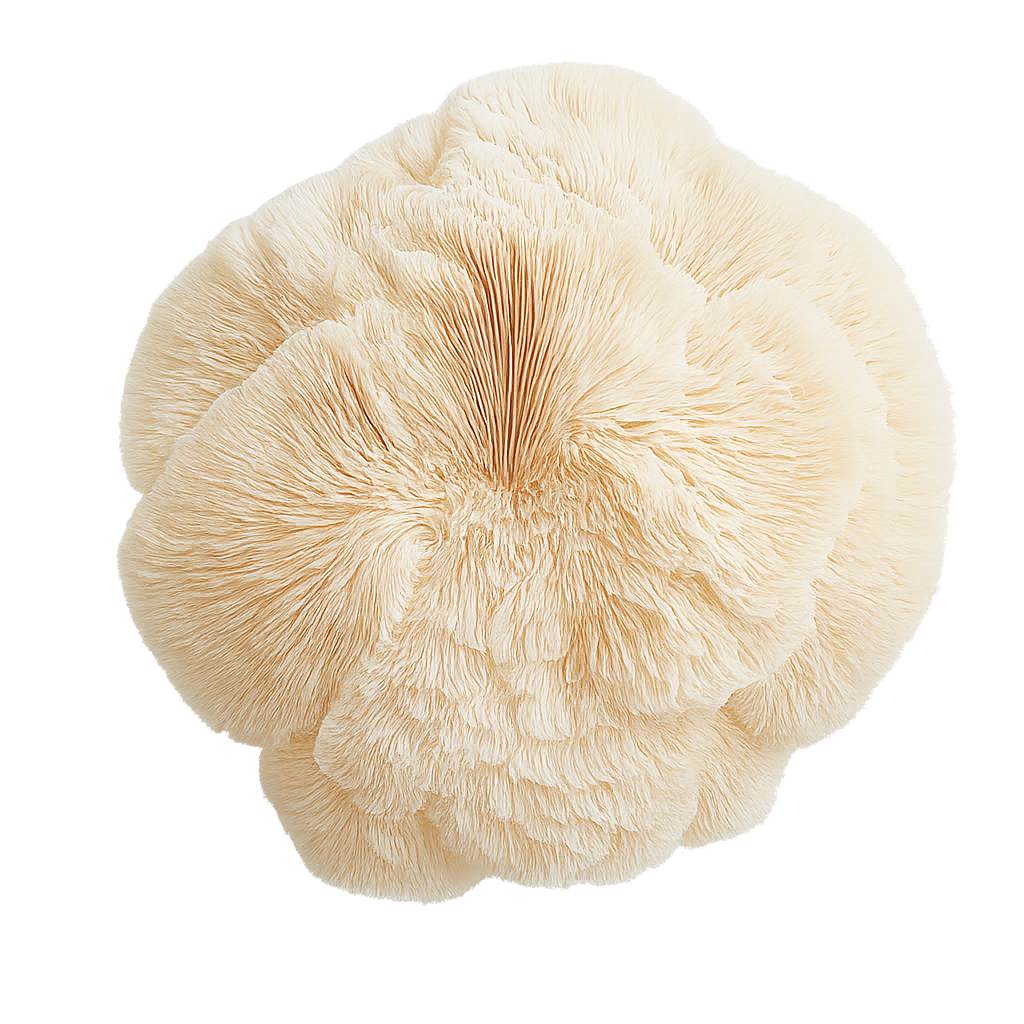
Hericium erinaceus is a white, shaggy mushroom that grows on hardwood — beech, oak, maple — in temperate forests across Europe, North America and East Asia. It has picked up a lot of names: lion’s mane, bearded tooth, monkey head mushroom, yamabushitake in Japan, hou tou gu in China.
Unlike most medicinal mushrooms, it has a long history as food, not just as medicine. The texture when cooked is close to crab meat, and it has been eaten in East Asia for centuries alongside its use in traditional medicine. That food history is one reason its safety record looks as clean as it does.
Two parts of the organism get sold, and they are not the same thing:
- The fruiting body — the visible mushroom, the part you would harvest and cook.
- The mycelium — the underground thread network. In supplements this is almost always mycelium grown on a sterilised grain substrate and sold together with the grain it grew on.
Hold on to that distinction. It decides what is in the bottle more than almost anything else on the label.
How it is grown
Commercially, lion’s mane fruiting bodies are grown on supplemented hardwood sawdust blocks. The block is sterilised, inoculated, colonised over several weeks, then moved to fruiting conditions — high humidity, fresh air, a temperature drop — where the mushroom forms over another one to two weeks. The mushrooms are harvested, dried and then either milled into powder or extracted.
Mycelium on grain skips everything after colonisation. That is the entire difference in cost, and most of the difference in what ends up in the jar.
We grow ours on our own farm and run the extraction in-house, which is the only reason we can say what part of the mushroom went into a given bottle. If a brand cannot tell you that, it is usually because they bought a drum of powder from a trader and do not know either.
Hericenones and erinacines: the compounds, and where they live
Lion’s mane contains the polysaccharides common to most medicinal mushrooms — chiefly beta-glucans, the cell-wall compounds studied for immune signalling. But the interest in this particular mushroom comes from two families of small molecules found almost nowhere else.
Hericenones are aromatic compounds found in the fruiting body. Erinacines are cyathane diterpenoids found in the mycelium. Both were shown, in cell cultures, to stimulate the synthesis of nerve growth factor (NGF) — a protein involved in the survival and maintenance of neurons. Erinacine A has been shown in rodent studies to cross the blood–brain barrier.
This is where a lot of marketing goes wrong, and it is worth being blunt about it: a fruiting-body product does not contain meaningful erinacines, and a grain-grown mycelium product does not contain meaningful hericenones. Any label that promises both from a single source is either blending two raw materials or repeating a claim it has not checked.
Two more things worth keeping straight:
- The NGF work is in vitro and in animals. Stimulating NGF synthesis in a dish of astrocytoma cells is a mechanism, not an outcome in a person.
- “Polysaccharides” on a label is not the same as “beta-glucans”. More on that below — it is the single most common way these products are inflated.
What the human research shows
There are human trials. They are small, short, and heterogeneous in what they administered. Taken together they are suggestive, not conclusive — and anyone telling you otherwise is selling something.
Memory and mild cognitive impairment
The most cited study is Mori and colleagues (2009). Thirty Japanese adults aged 50–80 with mild cognitive impairment took 3 g a day of lion’s mane fruiting-body powder, or placebo, for 16 weeks. The mushroom group improved on a standard Japanese cognitive scale compared with placebo, and the difference grew over the 16 weeks. Four weeks after they stopped, scores fell back.
That last detail is the interesting one — it suggests an effect tied to ongoing intake rather than a lasting structural change. But note the size: fifteen people per arm.
Saitsu and colleagues (2019) gave 31 healthy adults 3.2 g a day for 12 weeks and reported improvements on cognitive function testing. Li and colleagues (2020) ran a longer trial — 49 weeks — in people with mild Alzheimer’s disease, using a mycelium preparation standardised to erinacine A, and reported improvement on several measures. That last one is frequently cited to sell fruiting-body products, which, per the section above, is not a fair transfer.
Mood, stress and subjective wellbeing
Nagano and colleagues (2010) gave 30 menopausal women cookies containing lion’s mane powder for four weeks and reported lower scores on depression and anxiety questionnaires. Docherty and colleagues (2023) tested a single 1.8 g dose in healthy young adults and reported faster performance on a Stroop task within an hour, plus lower self-reported stress after 28 days of supplementation.
These are self-report measures in small samples over short periods. They are the weakest kind of evidence that still counts as evidence.
What the research does not show
Being precise here matters more than being enthusiastic:
- There is no evidence that lion’s mane treats, prevents or slows dementia in any population. The Alzheimer’s trial was one small study of a specific mycelial extract.
- There is no large, independently replicated trial in healthy adults. The biggest cognitive studies have around 30 participants.
- Preparations differ so much between studies — raw powder, hot-water extract, erinacine-enriched mycelium — that the doses are not directly comparable.
- Most trials come from a small number of research groups, several with industry involvement.
What you can honestly say: in several small trials, people taking lion’s mane scored better on cognitive and mood measures than people taking placebo, the effect appeared to depend on continued use, and nothing alarming turned up on safety.
Dosage: how much, and of what
Here is what the human trials actually used:
| Study | Daily amount | Форма | Duration |
| Mori 2009 | 3 g | Fruiting-body powder | 16 weeks |
| Nagano 2010 | 2 g | Powder, baked into cookies | 4 weeks |
| Saitsu 2019 | 3.2 g | Fruiting-body powder | 12 weeks |
| Li 2020 | 1.05 g | Mycelium extract, erinacine A standardised | 49 weeks |
| Docherty 2023 | 1.8 g | Fruiting-body supplement | Single dose and 28 days |
Why “3 grams” is not one number
Every figure above except Li is raw powder. An extract is a different unit. A 10:1 extract means ten kilograms of dried mushroom went in and one kilogram came out — so 300 mg of a true 10:1 extract is in the neighbourhood of the 3 g powder dose, assuming the extraction captured what you care about.
That assumption is doing heavy lifting, because extraction ratios are not regulated and not verified by anyone by default. This is exactly why the beta-glucan percentage on a certificate of analysis is worth more than any ratio printed on a box.
How long before anything happens
The acute study found a measurable change in task speed within an hour, but that is one task in one small sample. The trials that reported meaningful differences ran 4 to 16 weeks. If you are going to try it, judge it on a month, not a week — and, given the washout result in Mori’s trial, expect it to be something you take continuously rather than a one-off course.
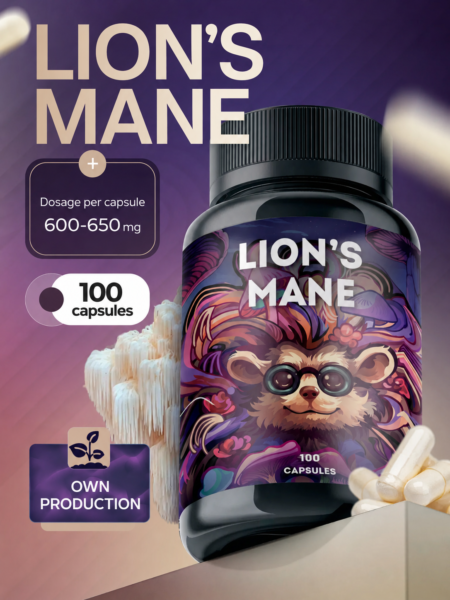
Капсулы с ежовиком гребенчатым 100 шт, 600–650 мг | мицелий Hericium erinaceus
Ежовик гребенчатый (Hericium erinaceus) содержит два уникальных соединения — эринацины и герициноны, — которые стимулируют синтез фактора роста нервов (NGF). Поддерживает здоровье мозга, память, концентрацию и когнитивные функции. В наших капсулах 600–650 мг чистого мицелия ежовика. 100 капсул во флаконе.
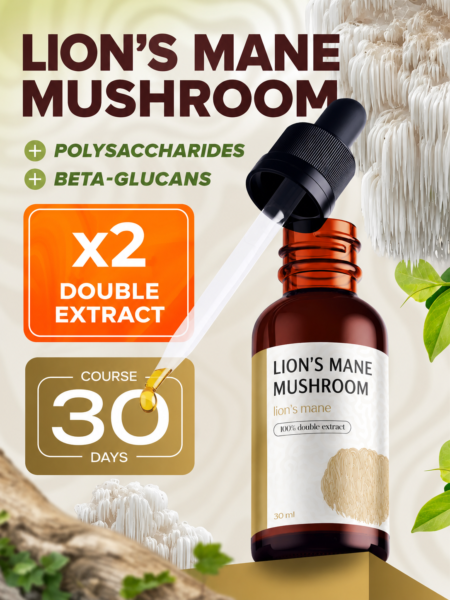
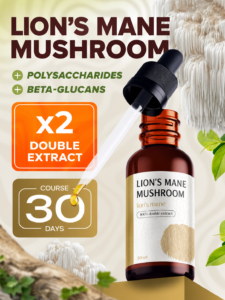
Двойной экстракт ежовика гребенчатого 30 мл | поддержка мозга и памяти | настойка Hericium erinaceus
Насыщенная настойка ежовика двойной экстракции: вода и спирт обеспечивают максимальную биодоступность герициононов и бета-глюканов. Поддерживает когнитивные функции, восстановление нервной ткани и ясность мышления. ! Без спирта
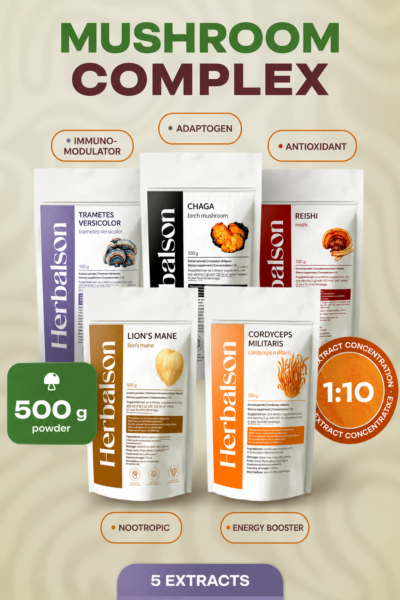
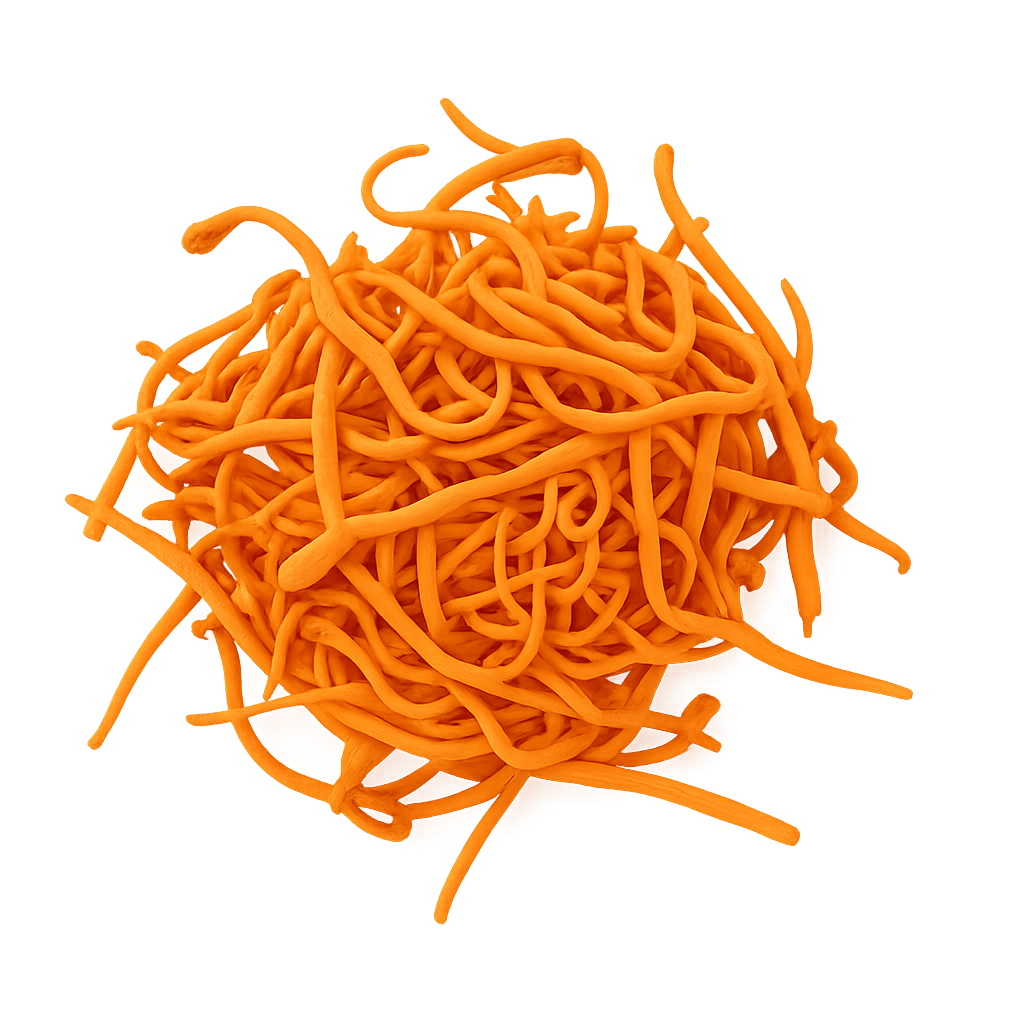
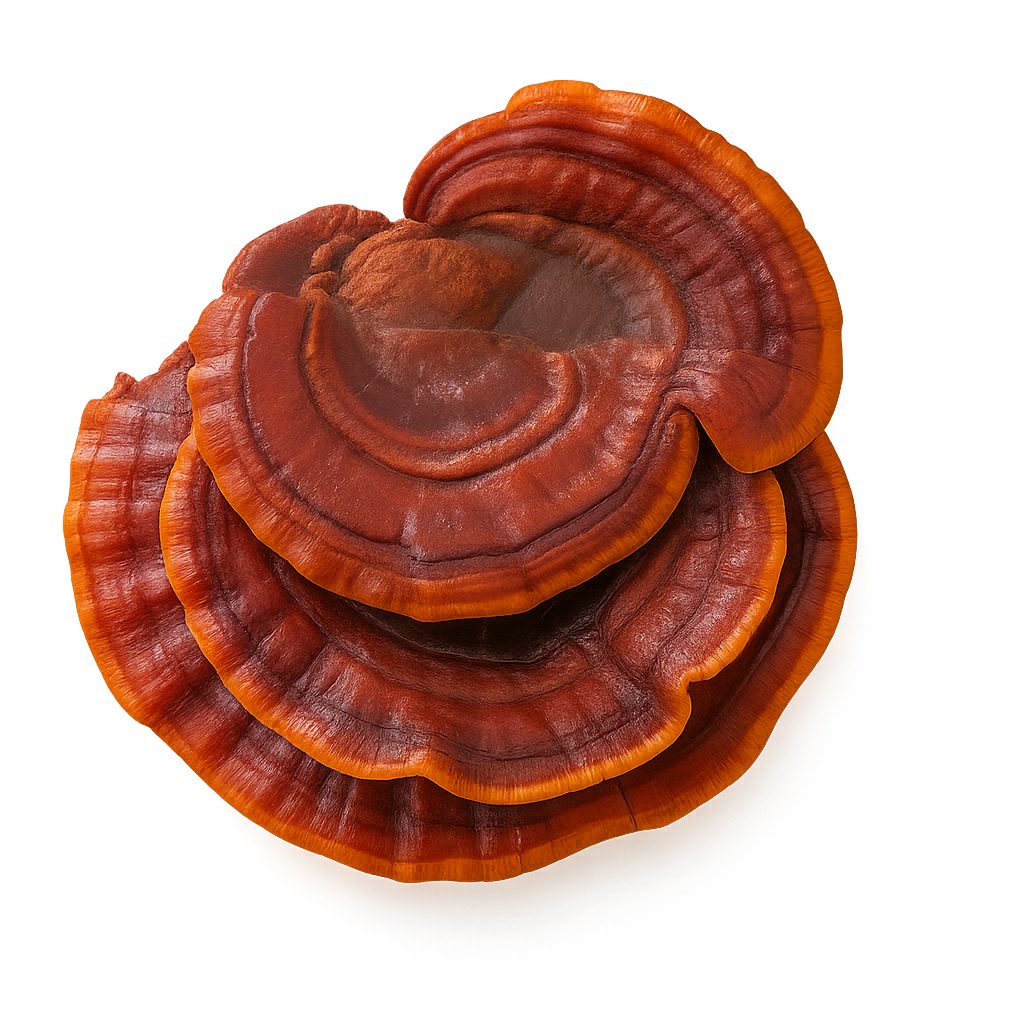
Набор грибных порошков: ежовик, кордицепс, рейши, траметес и чага | 5×100 г
Полный набор из пяти порошков функциональных грибов: ежовик, кордицепс, рейши, траметес и чага (по 100 г). Отлично подходит для смузи, чая или готовки. Каждый порошок сделан из цельных плодовых тел, высушенных и мелко измельчённых, чтобы сохранить биоактивные вещества.
Fruiting body vs mycelium on grain
This is the part of the industry that deserves the most scrutiny.
Growing a fruiting body takes weeks and real infrastructure. Growing mycelium on sterilised rice or oats takes days and a plastic bag. When the culture is finished, the mycelium is inseparable from the grain, so the whole block is dried and milled together. What you get is a powder that is largely starch — and starch is a polysaccharide.
That is why labels advertise “polysaccharides” rather than “beta-glucans”. A “50% polysaccharide” mycelium product can be mostly grain starch (alpha-glucans) with a low single-digit beta-glucan content. A fruiting-body extract worth buying will state beta-glucans specifically, usually somewhere between 20% and 40% depending on the extraction.
The honest caveat: mycelium is not worthless. It is where erinacines come from, and the 49-week Alzheimer’s trial used a mycelial extract. The problem is not mycelium — it is grain-grown mycelium sold with its substrate and described in a way that hides how much of the jar is rice.
How to read the label
- Species and part. “Hericium erinaceus, fruiting body” is a claim. “Lion’s mane mushroom powder” is not.
- Beta-glucans, with a number. If the label says only “polysaccharides”, assume starch until proven otherwise.
- Extraction method. Hot water, alcohol, or both — and if both, in what ratio.
- A certificate of analysis from a third-party lab, covering beta-glucans, heavy metals and microbial load. Mushrooms are efficient accumulators of heavy metals; where they were grown is a safety question, not a marketing one.
- Country of cultivation. “Packed in the USA” tells you nothing about where the mushroom grew.
Why dual extraction matters for this mushroom specifically
Beta-glucans are water-soluble and need hot water — and in practice, heat and time — to come out of the chitin cell wall. Hericenones are aromatic compounds that water does not pull efficiently; they need alcohol.
So a hot-water-only lion’s mane extract captures the beta-glucans and leaves much of the compound family the mushroom is famous for in the spent biomass. An alcohol-only tincture does the reverse. A dual extract runs both and recombines them, which is why the format exists for this species in particular.
Our own lion’s mane double extract is made this way, from fruiting bodies grown on our own farm, at 1 ml a day for a 30-day course. If you prefer capsules over a dropper, the lion’s mane capsules cover the same ground in a fixed 600 mg serving.
Lion’s mane vs caffeine and classic nootropics
People usually arrive at lion’s mane from one of two directions: they want to cut back on stimulants, or they have been reading about nootropics and this is the one that does not require a prescription or a grey-market vendor.
The honest comparison looks like this. Caffeine has an enormous evidence base, works within thirty minutes, and has a cost — tolerance, disrupted sleep if taken late, and a rebound when it wears off. Lion’s mane has a thin evidence base, works over weeks if it works at all, and has no comparable downside. They are not substitutes for each other in any practical sense: one changes how alert you feel right now, the other is a bet on a gradual shift in how easily attention holds.
Against prescription stimulants or racetams, the comparison is not close on effect size and is not close on safety data either, in opposite directions. Lion’s mane does much less and risks much less.
The realistic framing: it is a low-risk, low-cost, modest-upside supplement with some supportive small trials behind it. If you need a specific outcome by a deadline, it is the wrong tool. If you are building a boring daily routine and want something with a plausible mechanism and a clean safety record in it, it is a reasonable candidate.
Who it is probably not for
- Anyone expecting a noticeable effect in the first few days.
- Anyone unwilling to take it consistently for at least a month — the trial that measured a washout found the effect faded once intake stopped.
- Anyone with a mushroom allergy.
- Anyone looking for treatment of a diagnosed condition. This is a food supplement, and the research does not support that use.
Safety, side effects and who should be careful
Lion’s mane has a long food history and a clean record in the trials run so far, where reported adverse events were minor and no different from placebo. That is reassuring but not the same as a large safety database.
What is worth knowing:
- Digestive upset is the most commonly reported complaint, usually mild and usually at higher doses.
- Allergic reactions happen. There are published case reports of skin reactions and, in one case, a serious respiratory reaction. If you have a mushroom allergy, this is a mushroom.
- Anticoagulants. There is limited data suggesting effects on platelet aggregation. If you take blood thinners or have a bleeding disorder, clear it with your doctor first.
- Diabetes medication. Animal studies show effects on blood glucose. If you are managing glucose with medication, monitor and ask.
- Pregnancy and breastfeeding. There is no adequate data. That means unknown, not safe.
- Surgery. Given the platelet question, stopping a couple of weeks before a scheduled procedure is the conservative call.
Practical questions people actually ask
Когда принимать?
Morning or early afternoon. Lion’s mane is not a stimulant and will not keep you awake the way caffeine does, but it is taken for focus, and focus is a daytime job. Reishi is the mushroom for the evening slot.
Does it need to be taken with food?
No. Extracts can be added to water, coffee or a smoothie. Coffee is the most common vehicle and the taste is mild enough not to interfere.
Можно ли сочетать с другими грибами?
Yes, and it is the usual pattern. Lion’s mane with cordyceps in the morning is the common stack — one for focus, one for physical output. Reishi goes at night. Our four-tincture set exists for exactly this rotation.
Powder, capsules or extract?
Powder is the cheapest per gram and the closest to what the trials used, but you need grams of it and it has to be cooked or brewed to do much. Capsules are convenient and fixed-dose. A dual extract is the most concentrated and the only format that addresses both compound groups at once. If you are starting out, capsules or an extract will be easier to stay consistent with — and consistency is what the research actually rewards.
Will I feel it?
Do not expect a stimulant hit. People who report a benefit describe it as an easier time holding attention on long tasks, not a lift. If you are looking for something you feel in twenty minutes, this is the wrong mushroom.
References
- Mori K, et al. Improving effects of the mushroom Yamabushitake (Hericium erinaceus) on mild cognitive impairment: a double-blind placebo-controlled clinical trial. Phytotherapy Research, 2009. PubMed
- Nagano M, et al. Reduction of depression and anxiety by 4 weeks Hericium erinaceus intake. Biomedical Research, 2010. PubMed
- Saitsu Y, et al. Improvement of cognitive functions by oral intake of Hericium erinaceus. Biomedical Research, 2019. PubMed
- Li IC, et al. Prevention of early Alzheimer’s disease by erinacine A-enriched Hericium erinaceus mycelia. Frontiers in Aging Neuroscience, 2020. PubMed
- Docherty S, et al. The acute and chronic effects of lion’s mane mushroom supplementation on cognitive function, stress and mood in young adults: a double-blind, parallel groups, pilot study. Nutrients, 2023. PubMed
- Mori K, et al. Nerve growth factor-inducing activity of Hericium erinaceus in 1321N1 human astrocytoma cells. Biological & Pharmaceutical Bulletin, 2008. PubMed
About the author. Evgeniy Aliev is the founder of Herbalson. Since 2023 the company has grown, extracted and bottled functional mushrooms — lion’s mane, cordyceps militaris, reishi, turkey tail and chaga — on its own farm. He is responsible for raw material selection and production control.