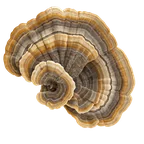
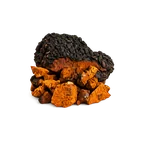
Two different fungi share the name cordyceps, and they are not interchangeable. One grows on caterpillars at high altitude and is among the most expensive biological materials on earth. The other is bright orange, can be cultivated properly, and is what almost every honest supplement on the shelf is made from.
The two species
Ophiocordyceps sinensis — the caterpillar fungus
The original. It parasitises ghost moth larvae on the Tibetan plateau and the Himalayas, killing the caterpillar and fruiting out of its head. It is harvested by hand from the wild, cannot be cultivated commercially as a fruiting body, and prices run into thousands of dollars per kilogram.
Overharvesting has pushed wild populations into decline; the species is now assessed as threatened. Nothing sold at supplement prices is wild sinensis. The arithmetic does not work.
Cordyceps militaris — the one you can actually grow
A bright orange species that fruits on a nutrient substrate under controlled conditions. It is genuinely difficult — it is one of the more demanding cultures to fruit consistently — but it is possible, which means real fruiting bodies exist at a sane price.
It also contains substantially more cordycepin than sinensis, which matters for the next section.
What “cordyceps sinensis” on a label usually means
Here is the part worth knowing before you buy anything: a supplement labelled Cordyceps sinensis is almost never the wild fungus. It is usually CS-4, a mycelial strain isolated from sinensis decades ago and grown in liquid fermentation.
CS-4 is not a fraud. It is a defined, studied material — the well-known exercise-performance trial in older adults used exactly this. But it is mycelium, not a fruiting body, and it is not the caterpillar fungus. A label that shows a picture of a caterpillar and sells you fermented mycelium is trading on an image it has not earned.
Worse, a lot of the market sells neither: plain mycelium grown on rice, which is largely starch. That is a different problem, covered in our guide to fruiting body vs mycelium.
Cordycepin and adenosine
The compound most associated with cordyceps is cordycepin (3′-deoxyadenosine), a nucleoside analogue. It is present in far higher amounts in militaris than in sinensis — this is the clearest chemical difference between the two.
Sinensis and CS-4 material is typically higher in adenosine, and CS-4 products are often standardised to it.
Two honest caveats. Most of the cordycepin research is laboratory work rather than human trials, so a high cordycepin figure is a marker of material quality more than a promise of an outcome. And cordycepin content varies enormously between growers and strains, so “contains cordycepin” without a number tells you nothing.
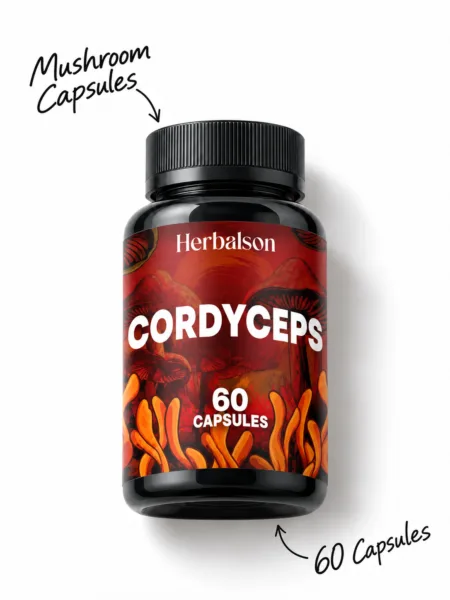
Cordyceps Militaris Capsules 60 pcs, 600mg | Energy & Immune Support
Cordyceps militaris fruiting-body extract, 600 mg per capsule in a plant-cellulose shell. 60 capsules, two a day — a 30-day supply.
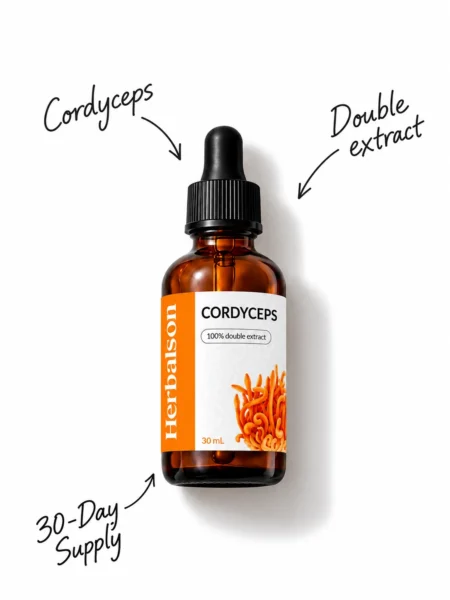
Cordyceps Militaris Double Liquid Extract 30ml | Energy, Endurance & Immune Support
Liquid double extract of Cordyceps militaris fruiting bodies, made with hot water and ethanol. 30 ml, about 1 ml a day, a one-month supply.
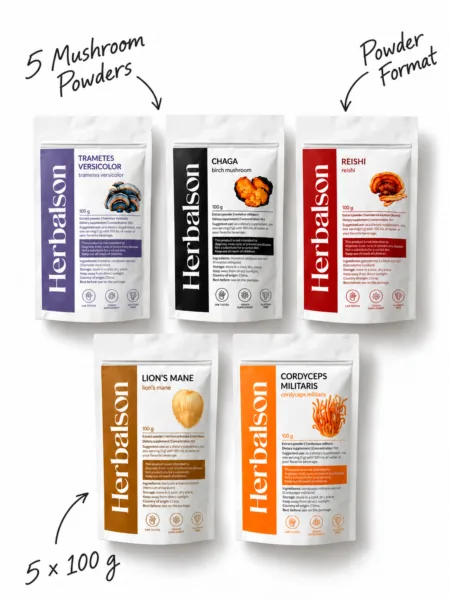
Mushroom Powder Set: Lion's Mane, Cordyceps, Reishi, Turkey Tail & Chaga | 5x100g
Five fruiting body powders of 100 g each: Lion's Mane, Cordyceps, Reishi, Turkey Tail and Chaga. A 3 g serving per cup, about a month of all five.
What the human research actually covers
Cordyceps is bought mostly for physical output, and the human evidence is modest but real:
- A randomised trial of CS-4 in healthy older adults reported improvements in measures of exercise capacity, including ventilatory threshold.
- A trial of a Cordyceps militaris-containing blend reported better tolerance of high-intensity exercise after chronic supplementation, with less effect after a single dose.
- Reviews cover immune-related activity, largely from laboratory and animal work.
The pattern to note: the clearer findings come from weeks of supplementation, not a single dose before training. Cordyceps is not a pre-workout in the caffeine sense, whatever the packaging implies.
Which should you buy?
For almost everyone, Cordyceps militaris fruiting bodies, for three reasons:
- It is the only one of the two you can obtain as a genuine fruiting body at a realistic price.
- It carries more cordycepin.
- It does not depend on harvesting a declining wild population.
CS-4 is a defensible choice if you specifically want the material used in the older exercise trials — just buy it knowing it is cultured mycelium, and do not pay a wild-harvest premium for it.
What is not worth buying at any price is an unspecified “cordyceps” with no species named, no part named and no compound figures.
How to read a cordyceps label
- Species, in Latin. Cordyceps militaris or Ophiocordyceps sinensis — not just “cordyceps”.
- Part used. “Fruiting body” is a claim. “Mycelial biomass” or “myceliated rice” means grain is in the jar.
- Cordycepin content with an actual number, ideally on a certificate of analysis.
- Beta-glucans, not “polysaccharides”.
- Caterpillar imagery on a cheap product is a warning sign, not a feature.
We grow Cordyceps militaris fruiting bodies on our own farm — it is the most technically demanding culture we run. The cordyceps double extract and the capsules are both made from those fruiting bodies.
Common questions
Is militaris a cheap substitute for sinensis?
No — that framing comes from marketing that treats the wild species as the gold standard because it is expensive. On cordycepin, militaris is the richer material.
Does cordyceps contain caffeine or act like a stimulant?
No caffeine, and no stimulant effect. What the trials measured was capacity under load after weeks of intake, not an acute lift.
When should I take it?
Morning or before training, daily. Timing around a workout has no evidence behind it; consistency does.
Can I stack it with lion’s mane?
Yes, that is the common morning pairing — one for focus, one for physical output. One is studied in relation to cognition, the other in relation to physical capacity.
Is it vegan if it grows on insects?
Cultivated Cordyceps militaris is grown on a plant-based substrate, so yes. Wild sinensis is not.
Cordyceps · Capsules · Double Extracts