• Own production
  • Clean ingredients
  • GMP certified
  • Made in Europe
Milk Thistle Extract Capsules

Milk Thistle Extract Capsules

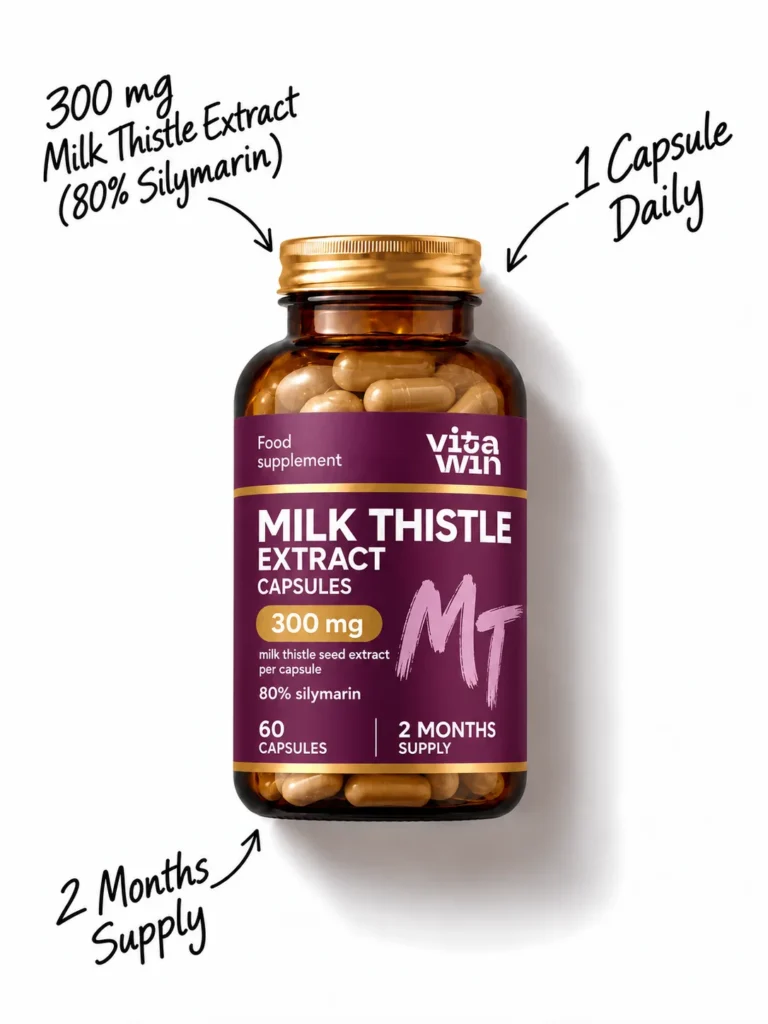
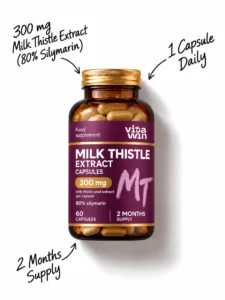
Milk thistle seed extract standardised to 80% silymarin.

  • Standardised to 80% silymarin
  • Seed extract
  • Traditional herb
$12.90
1
Choose your pack
Delivery in 5-10 days Tracked, worldwide14-day returns No questions askedPayment Visa, Mastercard, Amex

Frequently bought together

−10% for the set
Total for 3 items
$33.03$36.70
You save $3.67
Discount applies automatically in the cart
300 mg
per serving
Capsule
1 capsule a day
2 months
supply

HOW TO TAKE

Take 1 capsule a day with a meal.

SPECIFICATIONS

Active ingredient Milk thistle seed extract
Per serving 300 mg, 80% silymarin
Form Capsule
Quantity 60 capsules
Serving 1 capsule a day
Supply 2 months
SKU milk-thistle

PRODUCT FAQ

What is silymarin?

The group of active compounds in milk thistle seeds.

Can I take it with medication?

Ask your doctor first, as it may interact with some medicines.

About this product

Milk Thistle Extract Capsules — full description

Milk thistle extract capsules contain 300 mg of seed extract standardised to 80% silymarin — 240 mg of the active complex per capsule. 60 capsules, a two-month supply.

What silymarin is

Silybum marianum is a thistle native to the Mediterranean, and the part used is the seed, not the leaf or flower. Silymarin is not a single molecule but a complex of flavonolignans — silybin, silychristin, silydianin and isosilybin — of which silybin is the most abundant and the most studied. Standardising to 80% silymarin is what makes one extract comparable to another; a plain milligram figure for “milk thistle” says nothing about content.

Why seed extract rather than tea

The flavonolignans are poorly water-soluble, which is why an infusion of the seeds extracts very little of them and why the material is sold as a concentrated extract. Absorption is modest even then, and better with food containing fat — the reason the dosing instruction specifies a meal.

What the law allows us to say

Health claims for botanicals are on hold in the EU pending evaluation, so no claim is made for milk thistle here, however often you have seen one elsewhere. Traditional use and the research literature are both easy to look up, and we would rather you did that than take a marketing line from a shop. Caution: milk thistle is in the daisy family, so avoid it if you are allergic to ragweed, chrysanthemums or marigolds. It can affect how the liver metabolises some medicines — check with your doctor if you take prescription drugs — and it should not be taken in pregnancy or breastfeeding without medical advice.

How to take it

One capsule a day with a meal. Botanical extracts are generally taken as a course of several weeks rather than indefinitely. The other standardised botanicals in the range are turmeric with black pepper and ashwagandha root extract; reishi is the mushroom traditionally used in a comparable way.

What is in each capsule

  • Milk thistle seed extract (Silybum marianum) — 300 mg, 80% silymarin
  • One capsule a day, with food
  • 60 capsules — a two-month supply

Questions people ask

Why 80% silymarin?

It is the standardisation used in the clinical literature, and it makes the dose meaningful.

Is tea an alternative?

Not really — silymarin barely dissolves in water. An extract is the practical form.

How long should I take it?

As a course of weeks rather than continuously. See all supplements.

Good to know. Do not exceed the recommended daily dose. Food supplements should not replace a varied, balanced diet and a healthy lifestyle. Talk to your doctor before use if you are pregnant, breastfeeding, taking medication or have a medical condition. Keep out of reach of children. Store in a cool, dry place away from direct sunlight.

These statements have not been evaluated by the Food and Drug Administration. This product is not intended to diagnose, treat, cure, or prevent any disease.

Testing & certification

Every batch is lab-tested. All documentation is available on request.

Certificate of Analysis

A per-batch CoA covering identity, actives and contaminants

Per batch

GMP manufacturing

Production follows Good Manufacturing Practice standards

ISO 22000

Third-party lab reports

Independent assays of every batch for beta-glucan and triterpene content

Accredited lab

Contaminant screening

Screened for heavy metals, pesticides and microbial contamination

Dietary supplement