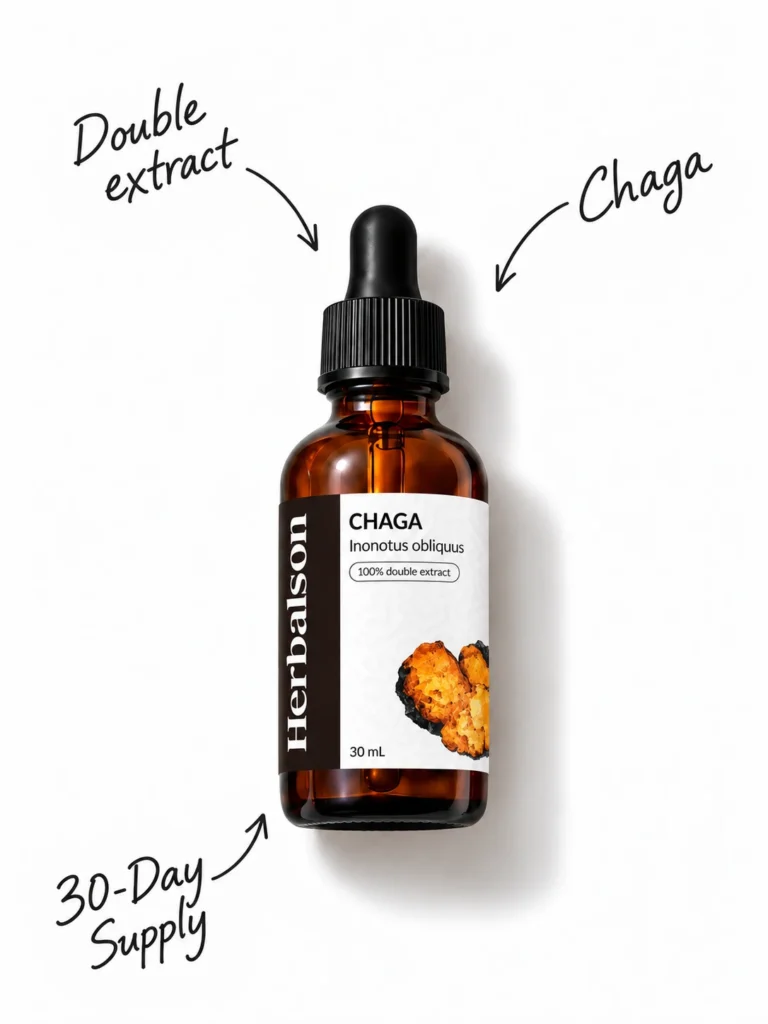
Chaga double extract is a liquid extract of wild Inonotus obliquus, made with hot water and then alcohol; the alcohol is removed afterwards, so the finished extract contains none. A 30 ml glass bottle with a pipette holds 30 servings of 1 ml (about 30 drops), so one bottle lasts a month.
Chaga is not quite a mushroom in the usual sense
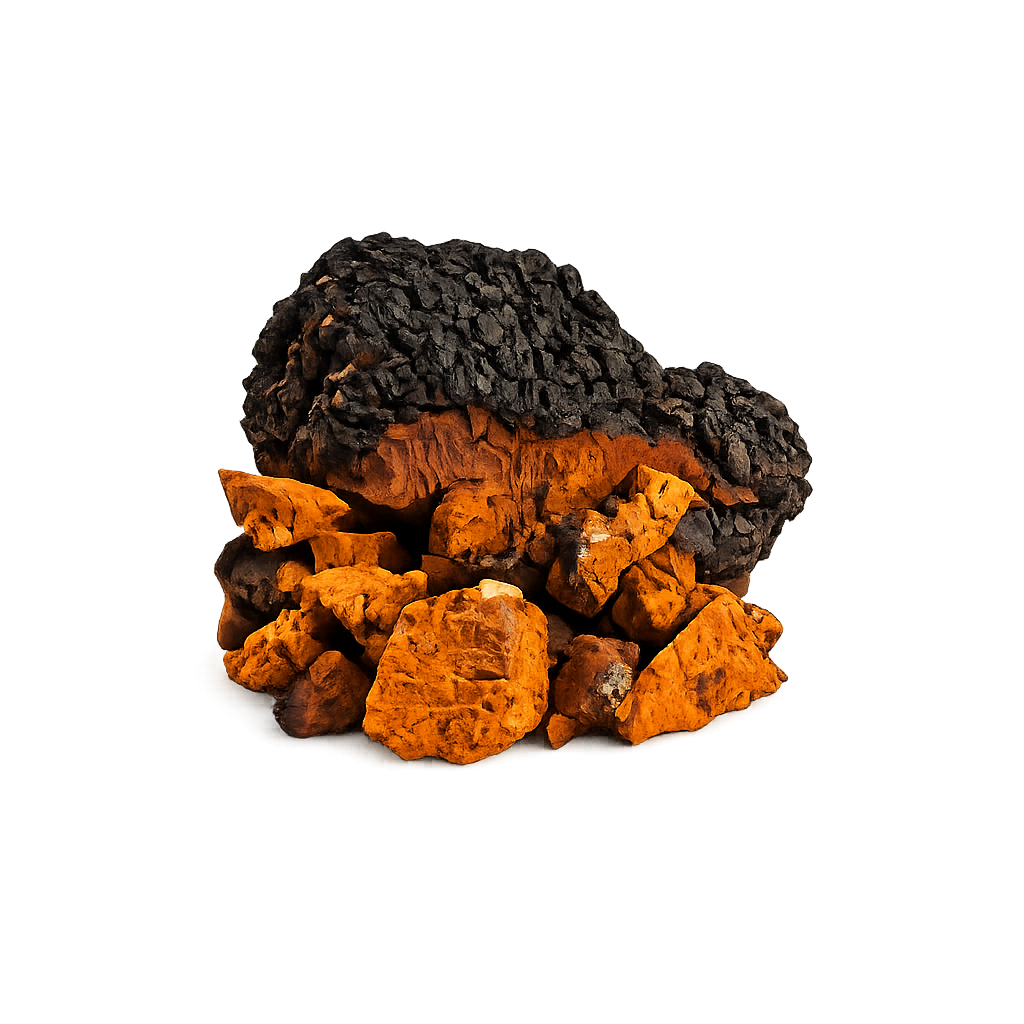
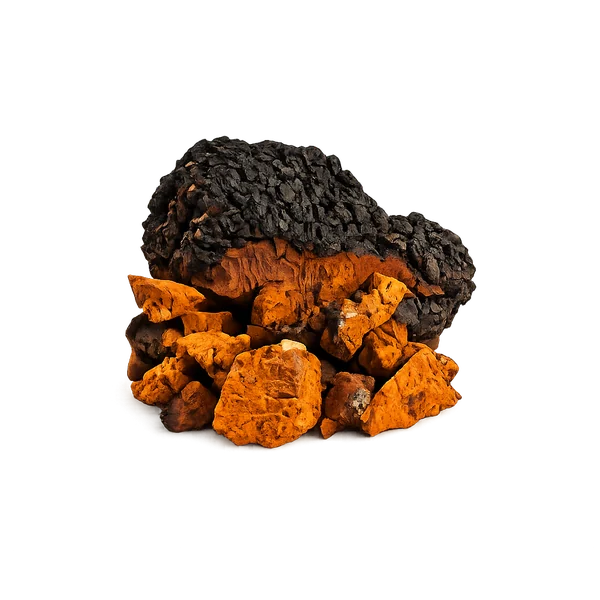
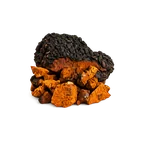
Chaga is the black, cracked, charcoal-like mass that Inonotus obliquus forms on living birch trees in cold northern forests. Strictly it is a sterile conk, or sclerotium, rather than a fruiting body in the cap-and-stem sense. It has long been used in Siberian and Eastern European folk tradition, usually as a dark tea. No health claims are authorised for chaga in the EU, so we make none.
Melanins, betulin and the rest
Chaga’s dark exterior is melanin, a large polyphenolic pigment that makes up much of its dry weight. It also holds triterpenes such as inotodiol and, picked up from the host tree, betulin and betulinic acid. These groups differ in solubility: the beta-glucans and part of the pigment dissolve in hot water, while the triterpenes and betulin need alcohol. Making the extract in two stages is how both sets end up in one bottle.
Wild or cultivated?
Ask this of any chaga product. Wild chaga takes years to form on a birch, and the compounds above come from that slow growth and from the tree itself. Cultivated “chaga” is almost always mycelium grown on grain, which has little melanin, no birch-derived betulin and much starch. Our chaga is the one species in the range that we do not grow on the farm: it is wild-harvested Siberian birch chaga, and the extract is made from that conk only.
How to take it
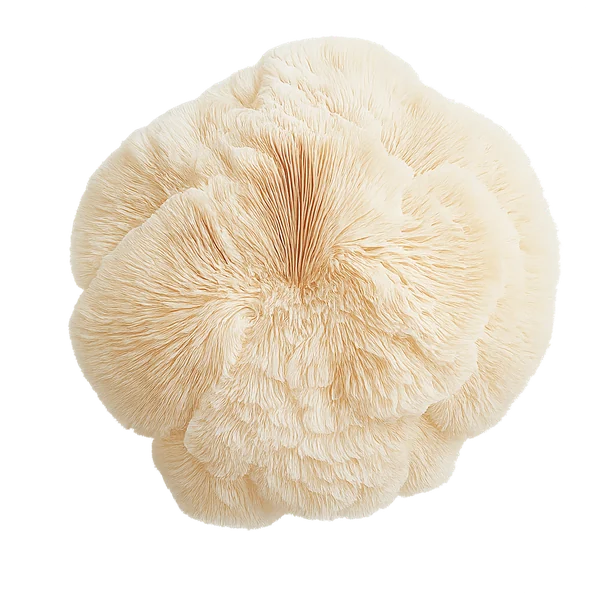
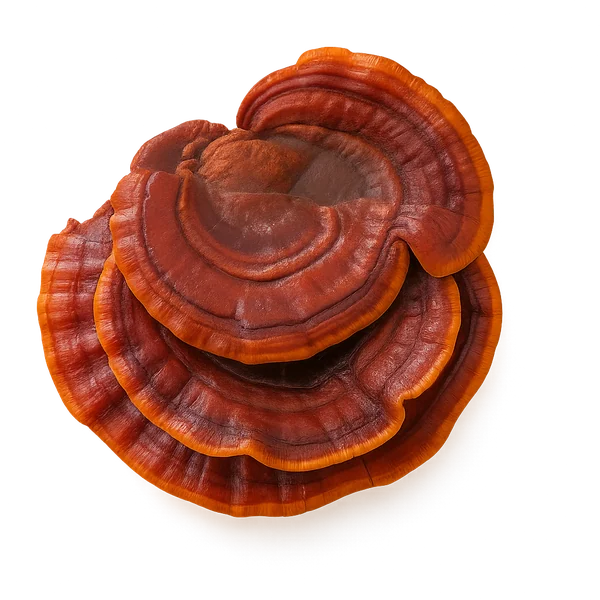
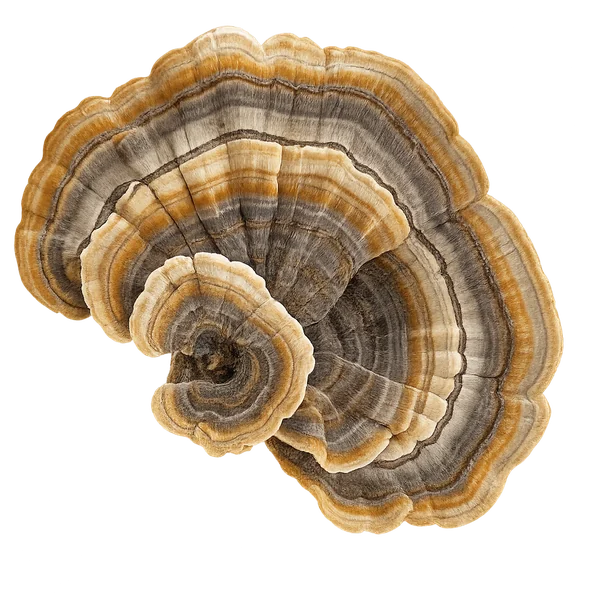
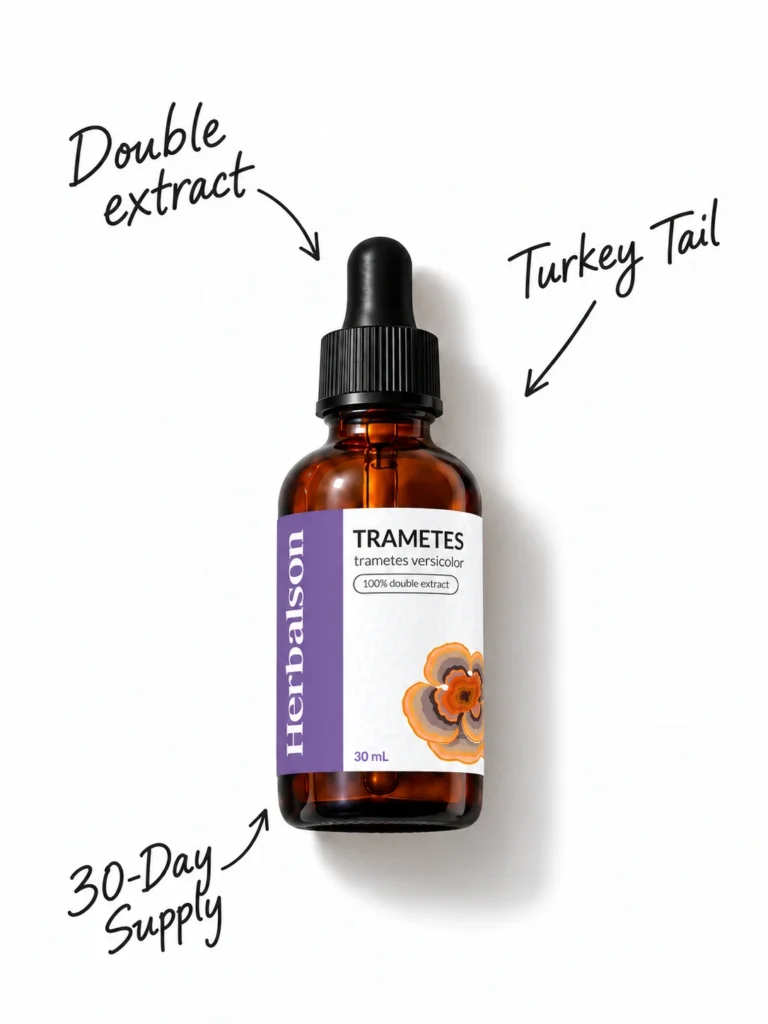
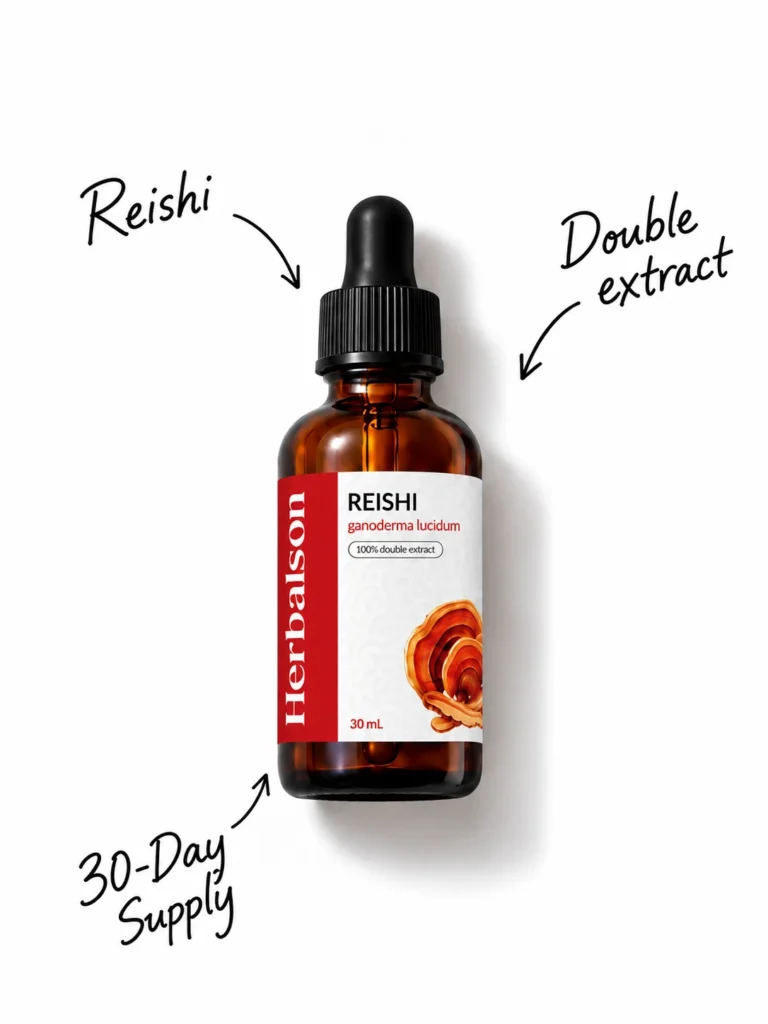
Add 1 ml to 150–200 ml of water or tea and drink it at any time of day, preferably between meals. The taste is mild, slightly woody and a little bitter. Chaga sits beside turkey tail and reishi; to try all five species as powders, see the mushroom powder set. The wider range is under mushrooms.
Keep the bottle in the refrigerator, below 10 °C, and use it within 30 days of opening. Chaga contains a lot of oxalates, so ask your doctor first if you have kidney disease or a history of kidney stones. The same goes for anticoagulants, diabetes medication, immunosuppressants, autoimmune conditions and planned surgery. Do not take it in pregnancy or breastfeeding, and do not give it to children.
What is in each bottle
- Inonotus obliquus wild-harvested chaga, double extract — extracted with water and alcohol, the alcohol removed during production
- 1 ml (about 30 drops) a day, any time
- 30 ml — 30 servings, a one-month supply
Questions people ask
Why take the extract rather than dried chaga?
Chunks need long steeping. The extract is ready to use: 30 drops in a glass of water.
Does it taste of coffee?
Only in colour. Chaga has a mild woody taste and no caffeine.
How long is a course?
One bottle is 30 days. Courses of one to two months, with a break, are the usual pattern.
Good to know. Do not exceed the recommended daily dose. Food supplements should not replace a varied, balanced diet and a healthy lifestyle. Talk to your doctor before use if you are pregnant, breastfeeding, taking medication or have a medical condition. Keep out of reach of children. Store in a cool, dry place away from direct sunlight.
These statements have not been evaluated by the Food and Drug Administration. This product is not intended to diagnose, treat, cure, or prevent any disease.