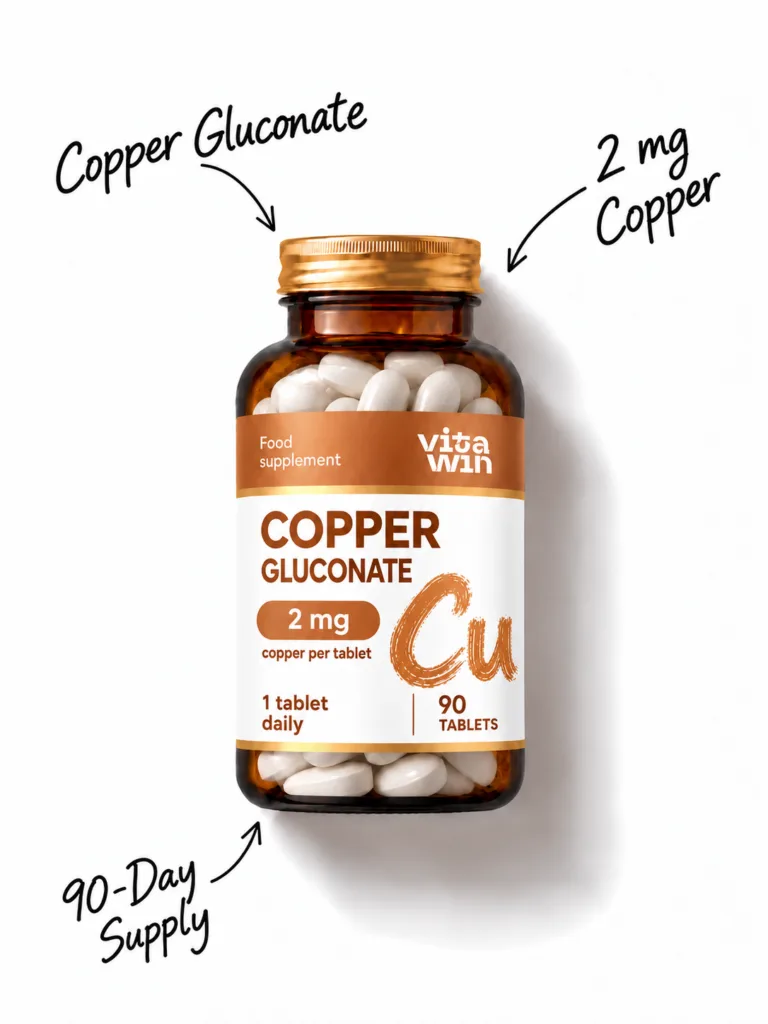
Copper gluconate 2 mg tablets provide 2 mg of copper as copper gluconate, one tablet a day. 90 tablets, a three-month supply.
What copper does in the body
Copper is needed in tiny quantities but touches a lot of systems, because several important enzymes depend on it: those that build collagen and elastin, make the pigment melanin, release energy in the mitochondria and handle iron. Copper contributes to maintenance of normal connective tissues, to normal energy-yielding metabolism, to normal functioning of the nervous system, to normal hair pigmentation, to normal skin pigmentation and to normal iron transport in the body. Copper also contributes to the normal function of the immune system and to the protection of cells from oxidative stress.
Why copper gluconate
Copper gluconate is the organic salt of copper with gluconic acid. It dissolves readily and is well tolerated, which is why it is a common form in food supplements. 2 mg is 200% of the EU reference value of 1 mg, and well below the EFSA upper intake level of 5 mg a day.
Who tends to run low
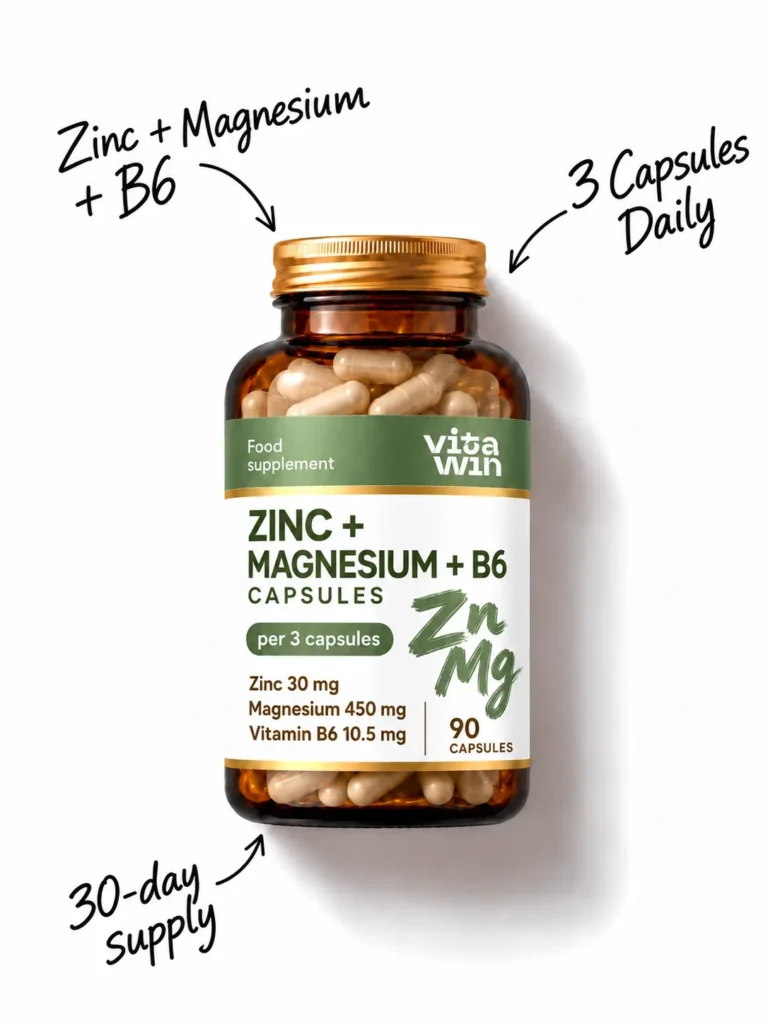
Copper comes from nuts, seeds, shellfish, offal, cocoa and wholegrains, and most varied diets cover it. The more common reason for a shortfall is competition: zinc and copper share an absorption route, so long-term zinc intake above 25 mg a day lowers how much copper is absorbed. If you take zinc or zinc + magnesium + B6 regularly, copper is the mineral worth a second look.
How to take copper gluconate 2 mg
One tablet a day with a meal. Copper is stored in the liver and removed through bile, so more is not better; keep to the dose and count copper from any multivitamin. Do not take copper if you have Wilson’s disease, a condition in which the body cannot clear it, and ask your doctor first if you have any liver condition.
Copper also takes part in iron handling, so it fits alongside iron bisglycinate with folic acid. The rest of the range is in minerals.
What is in each tablet
- Copper (as copper gluconate) — 2 mg, 200% NRV
- One tablet a day, with a meal
- 90 tablets — a three-month supply
Questions people ask
Why is the NRV above 100%?
The EU reference value for copper is 1 mg a day. A 2 mg tablet gives twice that figure and stays well under the 5 mg upper level.
Can I take it with zinc?
Yes, and it is a sensible pairing if your zinc intake is regular. Take them at different meals if you can.
Can I take it every day?
Yes, one tablet is intended for continuous use in healthy adults, as long as you stay within the daily dose.
Good to know. Do not exceed the recommended daily dose. Food supplements should not replace a varied, balanced diet and a healthy lifestyle. Talk to your doctor before use if you are pregnant, breastfeeding, taking medication or have a medical condition. Keep out of reach of children. Store in a cool, dry place away from direct sunlight.
These statements have not been evaluated by the Food and Drug Administration. This product is not intended to diagnose, treat, cure, or prevent any disease.
 This itemCopper Gluconate 2 mg — 90 Tablets$15.99