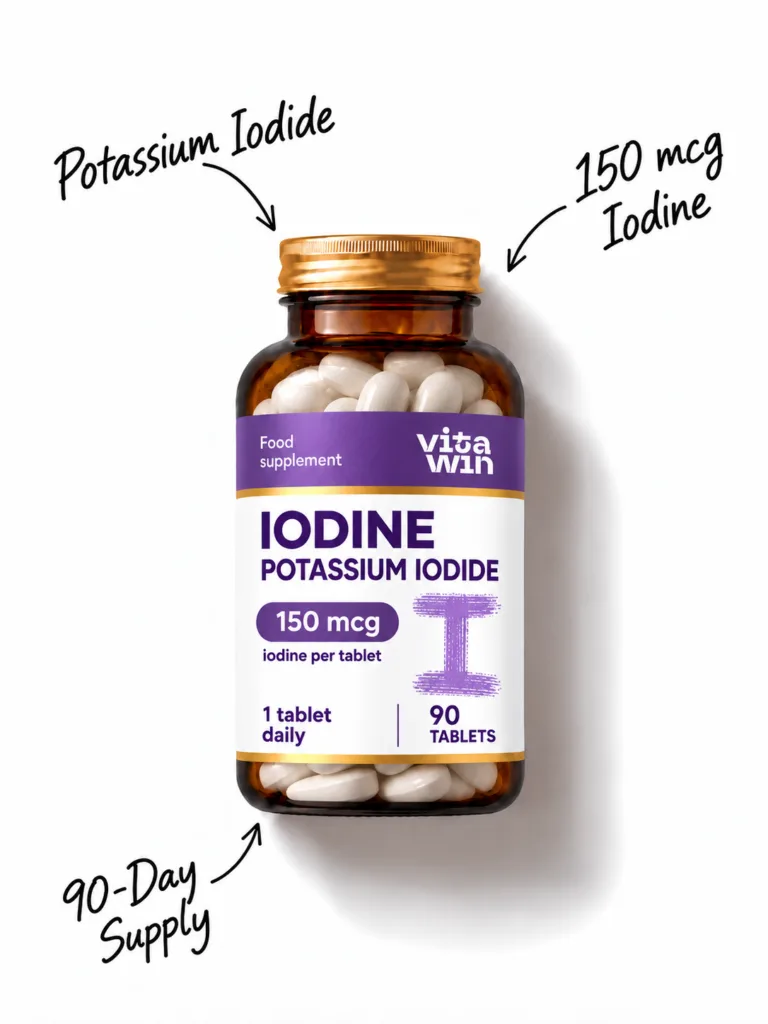
Iodine 150 mcg tablets provide 150 mcg of iodine as potassium iodide, one tablet a day. 90 tablets, a three-month supply.
What iodine does in the body
Iodine has essentially one major job, but it is a central one: it is built into the hormones made by the thyroid gland, a small organ at the base of the neck that sets the pace for much of the body’s metabolism. Iodine contributes to normal cognitive function, to normal energy-yielding metabolism, to normal functioning of the nervous system and to the maintenance of normal skin. Iodine also contributes to the normal production of thyroid hormones and normal thyroid function. The body cannot make iodine and stores little of it, so it has to come regularly from food or supplements.
Why potassium iodide
Potassium iodide is the standard form of iodine in food supplements. It dissolves readily and the iodide ion is the form the thyroid takes up. 150 mcg is 100% of the EU reference value, so one tablet is a maintenance dose rather than a high one.
Who tends to run low
Iodine in food depends heavily on the soil and the sea. Fish, shellfish, dairy and iodised salt are the main sources; inland regions, people who eat little fish or dairy, those who avoid salt and those following a plant-based diet often fall short. Sea salt and rock salt are not iodised unless the label says so. Needs rise during pregnancy and breastfeeding, which is a reason to speak to a doctor first.
How to take iodine 150 mcg
One tablet a day with a meal. Do not combine it with other iodine or kelp products — the EFSA upper intake level for adults is 600 mcg a day, and seaweed products can contain a great deal. If you have a thyroid condition or take thyroid medication, talk to your doctor before use and do not exceed the dose.
Iodine and selenium are closely linked in the thyroid, which is why they are often considered together — see selenium 100 mcg. A daily multivitamin is the broader alternative, and the rest of the range is in minerals.
What is in each tablet
- Iodine (as potassium iodide) — 150 mcg, 100% NRV
- One tablet a day, with a meal
- 90 tablets — a three-month supply
Questions people ask
Do I need it if I use iodised salt?
Often iodised salt, fish and dairy cover the need. A supplement is for people whose diet leaves a gap.
Can I take it with other supplements?
Yes, as long as no other product contains iodine, so the daily total stays within the upper limit.
How long can I take it for?
150 mcg a day is a maintenance amount suitable for continuous use in healthy adults. If you have any thyroid-related diagnosis, your doctor should decide.
Good to know. Do not exceed the recommended daily dose. Food supplements should not replace a varied, balanced diet and a healthy lifestyle. Talk to your doctor before use if you are pregnant, breastfeeding, taking medication or have a medical condition. Keep out of reach of children. Store in a cool, dry place away from direct sunlight.
These statements have not been evaluated by the Food and Drug Administration. This product is not intended to diagnose, treat, cure, or prevent any disease.